- Mon - Sat: 09:00 AM - 06:00 PM
- [email protected]
- +91 9194700477
- Solar Careers
- Contact Us


Our Blog


 Updated By: Admin
- May 29 2026
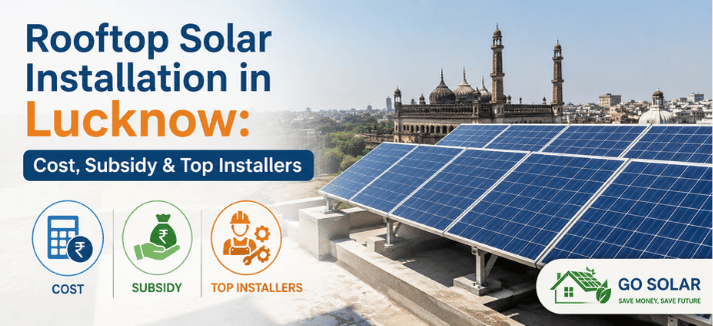
Rooftop Solar Installation in Lucknow: Cost, Subsidy & Top Installers
Electricity bills in Lucknow have been rising steadily, and more and more homeowners and business owners are asking the same question: is it time to switch to solar? The short answer is — yes, and 2026 might just be the best time to do it. With generous central government subsidies still active, falling solar panel prices, and reliable installers now operating across the city, rooftop solar installation in Lucknow has never been more accessible or affordable.
Whether you live in Gomti Nagar, Aliganj, Indira Nagar, or any other part of the city, this guide will walk you through everything you need to know — how much it actually costs, what subsidies you can claim, who the top installers are, and how Helium Solar can help you get started without any hassle.
Why Lucknow Is a Great Place for Solar Energy
Lucknow receives an average of 5 to 5.5 peak sun hours per day, which puts it among the better solar zones in north India. That means your panels will work hard every single day, especially in the long summer months. On a 3 kW system, you can easily generate 12 to 15 units of electricity per day — enough to power a standard household's fans, lights, refrigerator, television, and even an air conditioner for a good part of the day.
Uttar Pradesh's electricity tariff for domestic consumers currently sits between ₹5.50 and ₹7 per unit depending on your slab, and it has only gone up over the years. Going solar lets you lock in your energy costs for the next 25 years, since quality solar panels come with production warranties that last that long.
Rooftop Solar Installation Cost in Lucknow
One of the first questions people ask is: how much will it cost me? The answer depends on the size of the system you need, the quality of panels and inverter you choose, and whether you go with a basic on-grid setup or a hybrid system with battery backup.
For a typical 1 kW on-grid rooftop solar system in Lucknow, the total installation cost before subsidy ranges from ₹60,000 to ₹75,000 in 2026. A 2 kW system typically costs between ₹1,10,000 and ₹1,35,000, and a 3 kW system — which suits most middle-class homes — comes in the range of ₹1,55,000 to ₹1,90,000 before any government subsidy is applied. Larger systems of 5 kW and above, which are more suited for bigger households or small businesses, are priced around ₹2,50,000 to ₹3,20,000 depending on equipment brand and installation complexity.
These prices include solar panels, a grid-tied inverter, mounting structure, DC and AC wiring, net metering application assistance, and basic commissioning. Some installers also include one year of free maintenance in their packages, so it is worth asking about that when you compare quotes.
Government Subsidy on Solar in Lucknow – What You Can Claim
This is where it gets really interesting. The central government's PM Surya Ghar Muft Bijli Yojana, launched in 2024 and now running strongly into 2026, offers direct subsidies to residential consumers who install rooftop solar systems. These subsidies are transferred directly to your bank account after installation and verification.
Under this scheme, if you install a 1 kW system, you can claim a subsidy of ₹30,000. For a 2 kW system, the subsidy goes up to ₹60,000. And for systems between 3 kW and 10 kW, the subsidy is capped at ₹78,000. This is a one-time benefit for residential consumers, and the installation must be done through an empanelled vendor registered with the MNRE or your state electricity distribution company — which is LESA or PVVNL in Lucknow's case.
This means that for a 3 kW system costing around ₹1,70,000 before subsidy, your effective cost after claiming ₹78,000 comes down to roughly ₹92,000 — and you recover that amount through electricity savings within 4 to 5 years. After that, the electricity your system generates is essentially free for the remaining 20 years of the panel's life.
It is important to note that this subsidy applies only to residential (domestic) consumers and not to commercial or industrial establishments. For businesses, there are separate incentives under different schemes, and accelerated depreciation benefits of up to 40% under income tax laws still apply.
Net Metering in Lucknow – Earn from Your Excess Solar Power
Another huge benefit of going solar in Lucknow is net metering. Under this system, any electricity your solar panels produce but your home doesn't immediately consume gets exported to the LESA or PVVNL grid. In return, you receive credits on your electricity bill for that exported energy.
For most households, this means your electricity bill gets offset by the solar credits, and in many months — particularly during summer — some homeowners find that their bill drops to near zero or even results in a credit balance. Net metering is a legal right under UP's solar policy, and any reputable solar installer will help you complete the application process as part of their service.
Top Rooftop Solar Installers in Lucknow
Choosing the right installer is just as important as choosing the right panels. A poor installation can reduce your system's efficiency by 10 to 15 percent, void warranties, or cause safety hazards. Here is an honest look at what makes a good solar installer in Lucknow and which names have been trusted by local homeowners.
Helium Solar is one of the most trusted names for rooftop solar installation in Lucknow and the wider Uttar Pradesh region. With a team of certified solar engineers, transparent pricing, and a strong post-installation support record, Helium Solar handles everything from the initial site survey and system design to government subsidy paperwork and net metering registration. What sets Helium Solar apart is the end-to-end accountability — customers are not left wondering about the status of their subsidy or net meter connection after the panels go up.
Beyond Helium Solar, there are a handful of other established players operating in the city. Tata Power Solar, through its channel partners in Lucknow, offers high-quality panel installations with strong brand-backed warranties. Vikram Solar and Waaree Solar also have local dealer networks in the city that handle residential and commercial projects. Loom Solar, known for its high-efficiency monocrystalline panels, is another brand whose authorized installers are active in Lucknow.
When comparing installers, always ask for their MNRE empanelment certificate, check Google or Justdial reviews from verified customers in Lucknow, and insist on a written quote that breaks down the cost of panels, inverter, mounting structure, and labor separately. Never pay the full amount upfront — a standard payment structure is 50% advance, 40% before commissioning, and the remaining 10% after net metering and subsidy documentation is complete.
Which Solar System Is Right for Your Lucknow Home?
The size of the solar system you need depends mainly on your monthly electricity consumption. If your bill is between ₹1,000 and ₹2,000 per month, a 1 to 2 kW system will serve you well. For bills between ₹2,000 and ₹4,000 — which is common in mid-sized homes with one or two ACs — a 3 to 4 kW system is the right fit. Homes with higher consumption or small offices should look at 5 kW and above.
For most homes in Lucknow, an on-grid system without battery storage is the most cost-effective choice, since you can rely on the grid during the night and export surplus power during the day. If you face frequent power cuts, a hybrid system with a small battery bank can give you backup for a few essential loads, though it adds to the upfront cost.
How to Apply for Solar Installation and Subsidy in Lucknow
The process is simpler than most people expect. You can begin by registering on the PM Surya Ghar portal at pmsuryaghar.gov.in using your electricity consumer number and Aadhaar. Once registered, you select an empanelled vendor — or reach out directly to an installer like Helium Solar who will guide you through the portal registration themselves.
After installation, the installer submits a commissioning report to your DISCOM (LESA or PVVNL), which then inspects the installation and applies the net meter. The subsidy is processed once everything is verified and typically credited to your bank account within 30 to 60 days of commissioning.
The entire process from signing the agreement to the panels being live on your roof typically takes 15 to 30 days, depending on DISCOM workload and paperwork processing times.
Is Rooftop Solar Worth It in Lucknow in 2026?
Absolutely. With electricity tariffs continuing to rise, a generous central government subsidy still in force, and quality panels now lasting 25 years or more, the return on investment from a rooftop solar system in Lucknow is better than most fixed deposits or traditional savings instruments. A 3 kW system installed today at an effective post-subsidy cost of around ₹90,000 to ₹95,000 will save you upwards of ₹18,000 to ₹24,000 per year on electricity — giving you a payback period of just 4 to 5 years.
After that, you are generating free electricity for 20 more years. That is a return no bank will ever give you, and you are doing something good for the environment at the same time.
If you are ready to explore your options or want a free site survey and custom quote for your home or business in Lucknow, visit heliumsolar.in or give the Helium Solar team a call. The sooner you act, the sooner your bills start shrinking — and your savings start growing.
Our Recent Blog